
Science Says
Productivity Advice Has a Privilege Problem

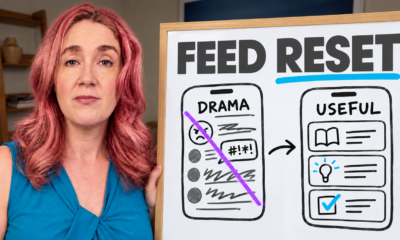
What if productivity advice just wasn’t written for you? I mean that as a real question, because maybe you’ve watched the same piece of advice transform someone else’s business or life and then fall apart in your hands in a week. And before you go, flip it around: somewhere out there, something that’s pretty effortless for you is an absolute wall for a colleague who’s every bit as smart and every bit as hardworking. Same advice, wildly different results. That’s what we’re breaking down today.
Productivity advice is written for an imagined person with a specific set of struggles and a specific set of privileges. When someone’s mix doesn’t match, the advice fails them, and they almost always blame themselves. I call this productivity privilege. And I’ll be honest right up front: I have it too. I also have the opposite. I’m gonna give you a couple of real examples, including one that cost me years before I saw it.
By the end of this post, you’ll know why following someone else’s step-by-step kept failing you, and you’ll have a five-question Advice Filter that finds the part worth keeping so you can rewrite it for YOUR brain instead of throwing the entire thing away. Because research consistently finds a reason this keeps happening, and it has a lot less to do with discipline, willpower, motivation, all that, than you’ve been told.
If we’re new to each other, hi, I’m Jenae, and this is Productivity Stacks. We’re an evidence-based site for freelancers and small business owners, and we help you work with your brain, not against it. There’s a free download, the Friction Map, if you want to run this on your whole business right away. But stick with me for the science first, because the why is what makes it stick.
Who Productivity Advice Is Actually Written For
Every piece of productivity advice you’ve ever gotten, the author pictured someone. They had someone in mind: someone with a certain amount of energy, a certain amount of focus, a certain bank account, a certain brain. Productivity privilege is the gap between that imagined person and you.
Now, one thing before we go further. Privilege is a big word, and some of it (money, health, race) is way bigger than this blog, and I am not the person to lecture anybody on that. This post is about one specific layer: the assumptions baked into productivity advice, and what to do when you don’t match those assumptions.
And I can tell you a lot about that gap, because I’ve lived on both sides of it, and I know so many people who’ve been in this situation.
In 2012, I had PTSD. I’m not gonna get into what caused it. That’s a different story. What matters here is the math: that PTSD left me with about four hours of genuine focus time. Four hours, total, for the entire day, for everything my business needed. And I would say standard productivity advice assumes a brain with 12 hours of usable time. Maybe 10. At least 8, right? Mine gave me four. So following that advice anyway didn’t make me more productive. It made me fail at a system built for somebody else, and then blame myself for that failure.
Today, I can work a full day. I recovered slowly, with some amazing help. Same me, same work ethic, same ambition. The only thing that changed was capacity I didn’t really earn and didn’t lack on purpose either. That’s productivity privilege. I didn’t have it (kinda had the opposite), now I mostly do, and neither version of me deserved credit or blame for it.
So here’s a flag you can start using today. Anytime advice contains the word “just”… “just batch it,” “just automate it,” “just post consistently”… that word is marking the exact spot where the author’s privilege is hiding. “Just” means “this basically costs me nothing.” It might cost YOU plenty. So circle it, put a pin in it. It’s coming back when we run the Filter. Because there’s real research on what happens when a task costs you more than it costs the person the advice was written for.
The Friction You Can’t See
So why does this happen? Why does advice written for somebody else fail? One word: friction.
Every task has two costs. There’s the time it takes to do it, which is what productivity advice generally talks about and focuses on. But there’s also the bandwidth cost, which productivity advice often assumes is zero. Bandwidth is everything a task drains out of you besides the time: the dread before it, the anxiety during it, maybe the worry after it.
When somebody says “just set up a bookkeeping system, it only takes an afternoon,” they’re quoting you the price THEY paid. If it took them an afternoon because they had no issues and it cost them zero bandwidth, then yeah, no big deal, just set it up. But that’s not everybody, and the research here is really clear. A major meta-analysis found that how aversive a task feels is a strong, consistent predictor of whether we put it off.
And yeah, okay, that same study did find that self-discipline matters too. I’m not disputing that, and I’m not saying discipline is zero. The point is what productivity advice often leaves out: how a task feels predicts procrastination in its own right. And research links anxiety to poorer working memory, the mental bandwidth you’d otherwise be using for the task itself.
So a high-friction task doesn’t just get delayed. When you finally do it, you’re doing it with less brain.
For me, that task was bookkeeping. I have financial trauma. I’m not gonna get into the details there, because that won’t help you. And numbers have never really been my strong suit either, if I’m being honest, even without that. So I would procrastinate as long as possible, and then when I finally sat down to do it, my anxiety about making a mistake was so high that I’d go over the numbers again and again, and even that didn’t seem like enough. This is a task that advice givers might budget an afternoon for. Take a second and guess what it was actually costing me every freaking month.
Tens of hours. Every single month.
And I resisted hiring a bookkeeper for years. When I finally did, her cost was the equivalent of about two hours of my time. And just so we’re clear, that’s because she was that much better and faster at it, so it didn’t take her long at all. So already, financially, that was awesome. Two hours to buy back tens. As a business decision, it was embarrassing how obvious it was and how long it took me. And of course, I told myself “business decision, I’m buying time.” But I was actually wrong about what I was buying, and I’m gonna show you what I mean in a second.
Because the time was the smaller part of what I got back. The moment bookkeeping stopped being something I had to think about, I got this freaking FLOOD of bandwidth. The background hum of worrying about when I’d do the books, the invoicing, whether I’d made a mistake somewhere… it just shut off. It was just gone. I could check my numbers every month without spiraling, because the bookkeeper had done it correctly. And tax time became reviewing what she sent me instead of a huge undertaking.
Plus, before that, I was over here trying to do an invoice after every billable project, which meant that huge stressor was happening all the freaking time. So that wasn’t an improvement over my procrastinate-practically-forever approach either. Neither of them was working.
After I got this going, same task, same business. I just stopped paying for it in a bandwidth currency that was already running really low.
I have an entire post on tracking your bandwidth the way you track your time, with how to set all of that up. If this is really hitting home for you, that deep dive is here.
So when a system keeps failing, check what it’s actually costing you before you conclude that something’s just wrong with you. The fix is coming up next, and everything we’ve covered so far is about to turn into something you can really use.
The Advice Filter
The fix is a rule I use with every client: diagnose first, prescribe second.
A client with financial trauma doesn’t have a software problem. A client with social anxiety experiences “just post on LinkedIn three times a week” as a prescription written for someone else’s nervous system. And here’s the thing. I said you’re not broken, and you’re not… but the advice isn’t necessarily broken either. The diagnosis just never happened.
And here’s the part I really, really want you to hear. Most productivity advice is actually a decent mechanism wrapped in packaging for someone else. The mechanism is what the advice accomplishes. The packaging is the step-by-step, which might be written for the author’s friction (which might be zero), and yours might be definitely not zero. They don’t have to come together.
So pick one piece of advice that failed you, and let’s run it through the Advice Filter. Five questions.
- Who was this written for? What struggle does it assume you don’t have?
- Where’s that word “just”? Told you it was coming back. Find the “just” and you’ve found the step that cost the author nothing, that they really got for free.
- What did step one cost you in bandwidth, not just money and time? Really think about that.
- Did it fail in execution, or did it fail at the starting line, right before you ever got started? Did you just put it off and put it off and put it off? If that’s what happens, that’s okay. That’s not a laziness signal. You just need to name it.
- What’s the mechanism underneath? This is the whole point. What is this advice actually trying to accomplish? Keep that part, and really think about it. We’re gonna rewrite the packaging for YOUR friction.
For me, the mechanism of “just do your bookkeeping” was never about a spreadsheet versus a software. It was: know my numbers, stay ready for taxes. So I kept that mechanism, and I rewrote the packaging in two words. In this case, hire someone.
When Hiring Isn’t on the Table
And I can already hear some of you: “Oh, must be nice. Just hire someone. Just run out and pay the money.” Hiring help is its own productivity privilege. I get that. It’s called money, and I did not always have the ability to do that either.
So when hiring is not on the table, the move that replaces it is what I call outsourcing to yourself: systems, checklists, tools, anything that creates distance between you and that scary thing. But step one is still the diagnosis. Figure out what the thing is. Then prescribe. Outsourcing to yourself is a really good option, and I’m making an entire post about it. When it’s live, it’ll be linked right here.
And you can run this friction check on your whole business, not just one piece of advice. Grab the free Friction Map. It takes about ten minutes, and it shows you where the next piece of advice will break before you spend a month on it, or freaking years like I did.
I spent so long failing at systems that were just never built for me or my brain. First with four hours of focus a day, then with a bookkeeping task that cost me ridiculous amounts of time every month. So yes, productivity advice has a privilege problem. But now you can see it coming, and you don’t have to throw the whole thing away when it shows up. Keep the mechanism. Rewrite the packaging, rewrite the step-by-step for you. Figure out what it’s trying to do, and then think it through for YOUR brain. That’s the Filter.
So I wanna hear it: what’s a piece of advice you rewrote to fit your own brain, and what did your version look like? Drop it in the comments. I wanna see your rewrites.
If you found this helpful, sign up for our newsletter here to get more content like this delivered straight to your inbox.
Science Notes
The content we produce leans on published research, so it’s only fair to show you the cracks too. No study is perfect, and pretending otherwise is exactly how productivity advice gets oversold. Here’s what the studies behind this video can tell us, and where the evidence stops. Both findings reflect the accepted body of research, and neither is an outlier study.
On task aversiveness and procrastination (Steel, 2007). A review of the whole procrastination literature, covering 691 correlations. The post uses the paper’s own framing: how aversive a task feels is a strong, consistent predictor of procrastination (r = .40). Two honest cracks. First, that aversiveness estimate rests on 8 studies, a smaller base than the personality predictors in the same paper. Second, the self-discipline predictors are numerically stronger (conscientiousness r = −.62, self-control r = −.58), which is exactly why the post concedes on the record that discipline matters too. The claim we’re making is narrower and it holds: the feeling predicts procrastination in its own right, and the effect intensifies for short-term projects. The aversiveness-procrastination link also has independent support beyond Steel, including Blunt and Pychyl (2000) and Zhang et al. (2020).
On anxiety and working memory (Moran, 2016). A review of 177 samples totaling 22,061 people, finding that anxiety is reliably associated with lower working memory capacity (g = −.334). Why the post says “links” and never “causes”: the underlying data are cross-sectional, and Moran explicitly flags that the reverse direction (lower working memory capacity as a risk factor for anxiety) is plausible. More nuance we’re aware of: the effect shows up in both clinical (g = −.424) and subclinical (g = −.235) samples, so the finding survives in everyday populations, just smaller. Anxiety shows no negative association with visual working memory specifically, overlap with depression hasn’t been fully ruled out as a contributor, and the individual studies in this literature are typically underpowered (median power 0.23)… which is exactly why the meta-analysis matters. Independent triangulation comes from Shi et al. (2019) on attentional control (g = −0.58).
What we deliberately didn’t cite. Mani et al. (2013), the famous “financial scarcity costs 13 IQ points” study, fit our topic and got cut anyway: it has well-documented replication problems, and the current meta-analytic picture is contested. Zhang et al. (2020) was cut from the video as a single-study mechanism finding, and it appears above only as independent support for a claim already anchored in a meta-analysis.
Sources
- Steel, P. (2007). The nature of procrastination: A meta-analytic and theoretical review of quintessential self-regulatory failure. Psychological Bulletin, 133(1), 65–94. https://doi.org/10.1037/0033-2909.133.1.65
- Moran, T. P. (2016). Anxiety and working memory capacity: A meta-analysis and narrative review. Psychological Bulletin, 142(8), 831–864. https://doi.org/10.1037/bul0000051