The Dopamine Detox has been all the rage: Give up the pings and the social and lock your phone in a drawer and live like a monk. But what if I told you that’s not only unrealistic, it’s not even how dopamine works?
I’m Jenae from Productivity Stacks and I have studied and coached on evidence-based productivity for well over a decade.
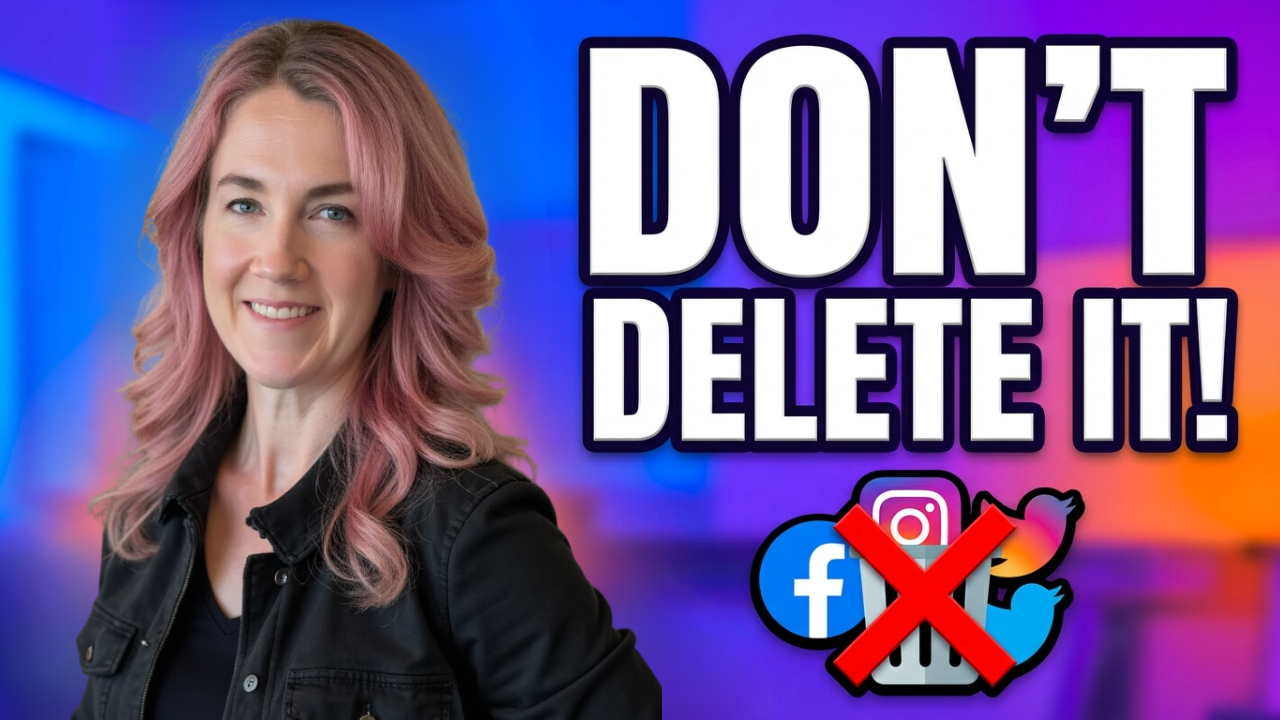
Today we’re myth-busting the whole dopamine detox trend and showing you how to get the results everyone actually wants without deleting social media or pretending you don’t have a smartphone.
Because for most of us (freelancers, business owners, even parents or people with far-away friends), deleting social media isn’t an option.
But that doesn’t mean we’re stuck being slaves to it either.
What a “Dopamine Detox” Actually Is and Where It Came From
To execute a dopamine detox, we need to understand what it is. And it’s not what you think.
Dopamine detox didn’t come from neuroscience; it actually came from Silicon Valley.
Around 2016, California psychologist Dr. Cameron Sepah started using the phrase “dopamine detox” with his clients, many of them tech executives who felt constantly distracted by notifications, emails, and social media.
His goal wasn’t to literally remove dopamine. It was to help them take short breaks from overstimulation like compulsive refreshing, constant multitasking, or the endless scroll.
What he was really applying was a behavioral psychology tool called stimulus control. But that doesn’t sound cool at all so the catchy name “dopamine detox” stuck.
And the internet did what it does best: it took it to the extreme.
Suddenly people were sitting in dark rooms for 24 hours doing nothing, trying to “reset” their brains. Or, in a slightly less extreme version, deleting their social media apps, closing their accounts, and turning their phones off.
Here’s where the confusion started: when people hear detox, they think of drug detox. Quitting alcohol, heroin, or cocaine.
But here’s the key difference: with a real drug detox, there is no safe amount.
A cocaine addict can’t detox and then have “just a little bit” on weekends.
But dopamine? It’s not a drug. It’s a neurotransmitter.
It’s your brain’s motivation signal, the one that says, “Hey, that looks rewarding… go after it.”
It’s not the feeling of pleasure itself. It’s the chase.
And here’s the twist: once you actually get the thing, your dopamine drops. That’s why you want to do it again.
You need dopamine to function. Without it, you wouldn’t get out of bed, let alone check off your to-do list.
So the goal isn’t to remove dopamine. It’s to recalibrate your brain’s reward system, especially in a world full of pings, alerts, and little red dots fighting for your attention.
Why You Can’t Just “Quit” Social Media
Here’s the problem with the classic dopamine detox advice: it assumes we can just walk away.
But for most of us (especially if you run a business, freelance, or even just like to stay connected with friends across the country), deleting social media can feel like deleting your entire support system or your connection to customers.
It’s not realistic. And science says it’s not necessary.
Dopamine isn’t inherently bad. It’s the brain’s motivation system.
The issue comes when our brains are trained to expect constant novelty.
Each notification becomes a mini slot machine with variable rewards that make us crave more, even if we don’t enjoy the experience itself.
So instead of deleting the apps, what we need to do is design friction. Make it harder to get pulled in unintentionally.
The Science of Triggers and How to Take Back Control
There are two types of triggers: external and internal.
External triggers are things like notifications, emails, or that red dot on your favorite app.
Internal triggers are things like boredom, stress, or even the urge to avoid a hard task.
Say you’re writing a proposal and suddenly think, “I should just check Instagram really quick.”
That’s not about Instagram. That’s your brain looking for a faster dopamine hit.
Apps are literally built on this loop.
The model was set out in the book Hooked by Nir Eyal, and it’s used by social media engineers everywhere: trigger, action, variable reward, and investment.
That unpredictability (not knowing when the next like, comment, or email will hit) keeps your dopamine loop firing nonstop.
The solution isn’t to unplug completely. It’s to interrupt the loop. To make mindless engagement mindful again.
Use Friction, Not Willpower
Trying to fight dopamine with willpower is like trying to stop a rolling boulder with your hands.
You might hold it for a while, but eventually, it’ll crush you.
Instead, you need friction.
Friction makes the wrong behaviors harder, and the right ones easier.
Examples:
Log out of apps after each use.
Move social media icons to a separate folder or hidden screen.
Use app blockers like Freedom or AppBlock.
Turn off unnecessary notifications. All of them.
Friction slows down the automatic behavior long enough for your prefrontal cortex (your rational brain) to come back online.
And when you do need to use those apps for business or for messaging clients, schedule intentional check-in windows.
For example: twice a day at noon and 5 PM. That way, you control the engagement, not the algorithm.
Accept the System, Then Outsmart It
Look, your phone isn’t evil.
These apps are just doing what they were designed to do: keep your attention.
The real power move is accepting that and then designing your environment so you win anyway.
Once I stopped trying to “beat” triggers and started designing around my brain, I got back almost four hours a day of deep-work time. Without deleting a single app.
Some of my clients have gotten back even more.
You don’t need to live like a monk to manage dopamine.
You just need to work with your biology instead of against it.
The Bottom Line
So remember: dopamine isn’t the enemy.
It’s your motivation system.
You can’t detox from it, but you can recalibrate it.
Detox the distractions, not the dopamine.
I actually made something to help you get started: a free Real-Life Dopamine Recalibration Starter Kitwith simple steps and tools you can use right away. You can grab it using the link in the description below.
And if you found this video helpful, hit that like button and share it with someone who’s trying to find balance with their phone again.
And remember, you don’t need to delete social media to reclaim your brain.
You just need to take it back, one intentional click at a time.
What friction strategies have worked for you? Have you tried any form of dopamine detox, or are you skeptical of the whole trend? Let me know in the comments!