Science Says
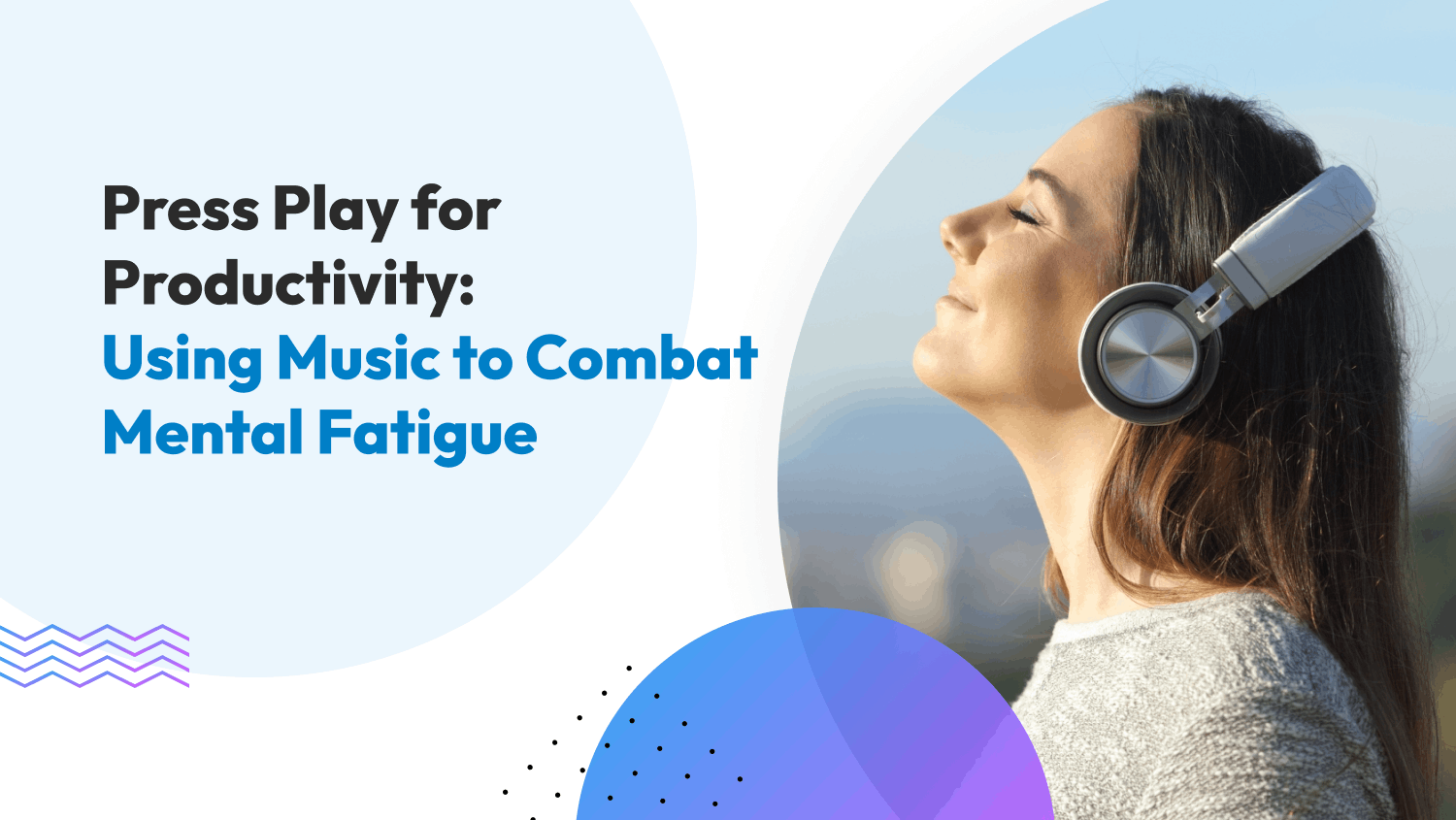
Press Play for Productivity: Using Music to Combat Mental Fatigue

How many playlists do you have saved right now? Is there one for workouts, another for cleaning, maybe a driving mix? Many of us instinctively use music as a source of motivation, energy, or focus. (Have you seen how many views those ‘ADHD focus music’ or ‘Lofi hip-hop for studying’ YouTube channels get? It’s wild.)
But here’s what I’ve always wondered: does music actually make a difference when we’re trying to stay alert or push through that afternoon slump? Or are we just telling ourselves it helps?
Well, turns out there’s real science here. A recent research paper examined nine studies from 2008-2023 testing music’s effectiveness against mental exhaustion, and the results are fascinating. And honestly, they validate something I discovered by complete accident during my grinding freelancer days.
Mental Fatigue Affects Everything (Not Just Your Brain)
First, let’s talk about what mental fatigue actually is. Scientists define it as a “psychobiological state induced by prolonged and sustained cognitive tasks.” In normal human terms, it’s that feeling when your brain is absolutely spent after back-to-back client calls and you just want to decompress in silence. Or when you’ve been staring at spreadsheets for hours and suddenly Instagram scrolling seems like the only activity you’re capable of.
But here’s what caught my attention in this research: mental fatigue doesn’t just mess with your thinking—it impacts your physical functioning too. This explains so much. Like why driving becomes legitimately dangerous when you’ve been on the road too long. Or why you might trip going up the stairs when your brain is wrestling with a problem from work.
In sports, this shows up clearly. Tennis players make more errors in hour two of a match, marathoners’ form breaks down at mile 15. It’s not just physical fatigue. Your brain’s exhaustion literally affects your body’s performance.
Action Plan: Don’t dismiss mental fatigue as just a thinking problem. It spills into everything: your workouts, daily tasks, even your coordination. Before tackling anything physical that needs focus or quick reactions, honestly assess if you’re mentally alert enough. Your brain fog might lead to actual accidents.

How Music Actually Helps (According to Science)
The research highlighted three main theories for why music helps combat mental fatigue, and they all make sense:
Attentional Resource Theory: When you’re mentally exhausted, staying focused becomes nearly impossible. Music—especially upbeat music without lyrics (we’ll get to why in a minute)—helps regulate your attention, making it easier to stay engaged without as much mental effort.
Brain Reward Circuits: This one’s fascinating. Music activates the same reward circuits that release dopamine, which not only improves mood but actually reduces how hard tasks feel. It’s literally changing your brain chemistry to make work feel less exhausting.
Emotional Regulation: We all know music affects our mood. Upbeat or personally meaningful songs trigger positive feelings that counteract the sluggishness of mental fatigue.
The common thread here is that music helps with attention, creates positive energy, and reduces how terrible we feel when exhausted. But not all music is created equal…
The Lyrics Problem (Or: How I Almost Emailed Song Lyrics to a Client)
Here’s where the research gets specific and validates my most embarrassing work moment. Three studies looked at exciting (>120 bpm) versus relaxing (<90 bpm) music for cognitive tasks. The kicker? All the effective music was lyric-free.
I learned this the hard way. Picture this: I’m exhausted, trying to power through client emails with some music on. Next thing I know, I’ve literally typed song lyrics INTO THE EMAIL. That was it. No more lyrics while writing anything. Ever.
The science backs this up completely. Across studies, fast-paced instrumental tracks helped people maintain focus and recover from mental fatigue better than relaxing music or silence. Participants had faster reaction times and better working memory with energizing, lyric-free music.
Now, I can handle lyrics if I’m just reviewing my plans for the day or doing something that doesn’t require actual writing. But the second I need to execute, instrumental only.
Action Item: Update your work playlist with lyric-free tracks over 120 bpm. Trust me on this one. Your emails will thank you.
My Accidental EDM Discovery
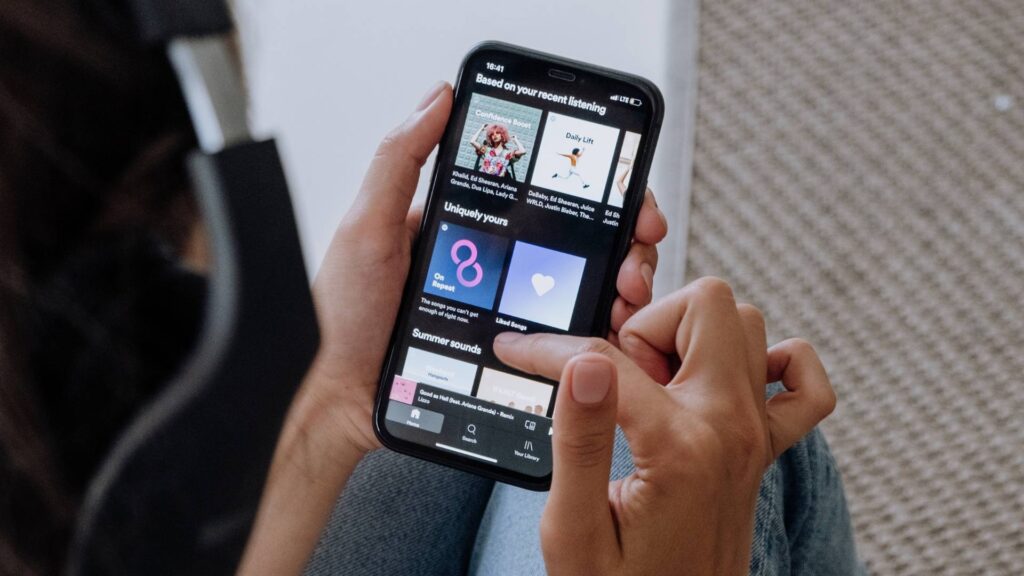
Okay, confession time. I discovered my ultimate productivity hack completely by accident. Back in my grinding freelancer days, I was desperate. Running on empty with deadlines looming, I frantically searched my Spotify for ANY playlist without lyrics (because, see above re: the email incident).
I landed on EDM. Electronic Dance Music.
I know, I know. Some of you are thinking “seriously?” But here’s the thing: it was MAGIC. Even better than coffee for those afternoon slumps. Even when EDM tracks have occasional lyrics, they’re usually repetitive enough that they don’t grab my attention like regular songs.
My clients think I’m absolutely insane when I suggest this. But here’s what the research shows: it’s all about finding YOUR music. Different genres work for different people. The science gives us guidelines, but you might be in that percentage where something totally different works. You have to experiment.
Your Personal Playlist Matters (Especially for Physical Tasks)
The research on physical performance was interesting. Instead of categorizing music as “exciting” or “relaxing,” they let people choose their own favorites. The results showed that personal preference music led to (compared to silence or no-music conditions):
- Running farther in endurance tests
- Faster treadmill times
- Better motor control and coordination
- Feeling less exhausted overall
So don’t feel like you HAVE to blast pump-up music at the gym if that’s not your thing. If Broadway soundtracks get you through folding laundry, embrace it. Your mood boost might be exactly what you need.
Music During vs. Music Breaks
Here’s something I hadn’t considered: the studies showed music helps both DURING tasks and as recovery between them. Some participants listened while working, others took 15-20 minute music breaks between demanding tasks. Both approaches worked.
These days, with my business more structured and fewer crushing deadlines, I can actually take those breaks. Sometimes I’ll take a proper nap (luxury!). But back in the freelancer grind, those EDM-powered work sessions saved me.
Now I’m more strategic about it. Music during admin tasks works great. A quick music break before diving into strategy work can be perfect too.
Action Item: Experiment with both approaches. Maybe you need background music while working, or maybe you need recovery music breaks. There’s no wrong answer.
Why Music Beats Other Quick Fixes
Here’s what I love about using music for mental fatigue: no downsides.
Think about it:
- Caffeine leads to jitters, anxiety, and 2 AM insomnia
- Energy drinks give you all that plus the sugar crash
- External rewards can kill your intrinsic motivation over time
Music is free, instantly accessible, and won’t mess with your sleep or give you the shakes. You can use it during work, during breaks, or as background for routine tasks. No side effects except maybe annoying your partner with your questionable EDM choices.
Creating Your Productivity Soundtrack System
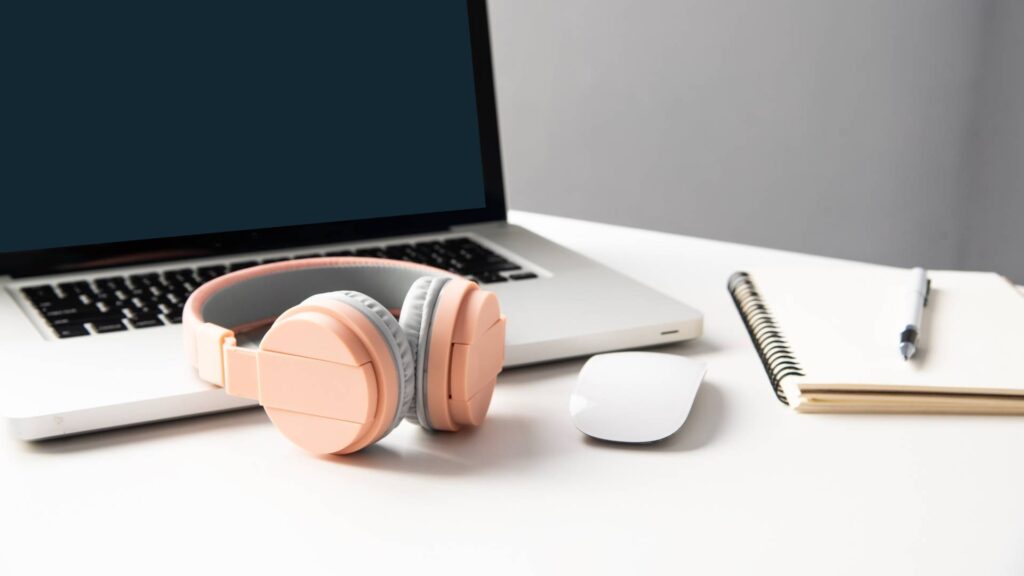
After years of trial and error (and one airport nightmare that led to me investing in TWO pairs of noise-canceling earbuds because redundancy is essential), here’s my system:
The Environment Control: I cannot emphasize this enough—invest in good noise-canceling earbuds. I once tried to work in an airport with weird music playing and a couple arguing nearby. Even with regular earbuds cranked up, I couldn’t focus. When my left earbud died on pair #1, leaving me exposed to environmental chaos on one side, I immediately ordered a backup pair. Never again.
The Playlist Strategy: Those focus apps with special frequencies just don’t work for me. My brain rejects them like they’re fake (they’re not, it’s just me). Instead, I curate Spotify playlists or use ones from friends with actual DJ skills. Real music, real results.
The Genre Match:
- Deep focus writing = instrumental only (usually EDM for energy)
- Planning/reviewing = can handle some lyrics
- Admin tasks = whatever keeps me moving
- Afternoon slump = EDM emergency protocol activated
The Bottom Line
This research validates what many of us do instinctively: using music to power through tough moments. Whether it’s focus playlists at work, favorite songs for chores, or workout tracks, there’s actual science backing these habits.
But here’s the key: everyone’s different. My EDM salvation might be your productivity nightmare. The studies give us guidelines (try 120+ bpm for focus, go lyric-free for cognitive work, use personal favorites for physical tasks) but you have to run your own experiments.
Start here:
- Track what music you naturally reach for when tired
- Notice when lyrics help vs. hurt
- Test different genres for different tasks
- Invest in controlling your sound environment
- Give yourself permission to use whatever works (even if it’s EDM)
Remember, this is about finding YOUR productivity soundtrack. The science shows music works. Now it’s time to find what works for you.
What’s your secret weapon playlist? And please tell me I’m not the only one who’s accidentally typed song lyrics into important documents… Drop your music productivity wins (and fails) in the comments!
P.S. If you’re still relying solely on that third cup of coffee to push through mental fatigue, maybe it’s time to try the music prescription instead. Your sleep schedule will thank you. 💪
Limitations
While this review provides valuable insights into the effectiveness of relaxing, exciting, and personally preferred music in reducing mental fatigue and mitigating performance decrements across cognitive and physical domains, several important limitations remain.
- Insufficient and Heterogeneous Evidence:
The existing body of research is relatively small and marked by substantial heterogeneity in outcome measurement, study design, and intervention type. Variations include whether music is used during or after fatiguing tasks, differences in how mental fatigue and performance are operationalized, and the diversity of physical and cognitive tasks examined. This lack of uniformity made it impossible to conduct a robust meta-analysis; pooled results would not accurately reflect specific effects or allow for strong generalizations.
- Limited Scope of Music Styles and Features:
Although relaxing, exciting, and personal preference music show beneficial effects, studies in the review did not explore the full spectrum of music styles present in contemporary society. The broad terms “relaxing” and “exciting” music lack precise definitions related to genre, tempo, instrumentation, and loudness, which are crucial for translating findings into practical recommendations. Specific genres like classical, jazz, rock, pop, hip-hop, and electronic dance remain unstudied, leaving gaps in understanding how different musical elements interact with mental fatigue.
- Underexplored Real-World Applications:
Most studies focus on laboratory tasks or controlled sport settings, with limited investigation of music’s effects in other everyday scenarios. Critical contexts such as workplace productivity, long-duration driving, and varied sports settings require further research to assess music’s practical impact on mental fatigue outside the experimental environment.
- Incomplete Understanding of Mechanisms:
While emerging theories implicate attention, dopamine, and adenosine transmission in the relationship between music and mental fatigue, the neurobiological mechanisms are not fully understood. More studies using direct physiological and imaging approaches are needed to clarify how music interacts with brain regions like the anterior cingulate cortex (ACC) and neurochemical pathways related to motivation and fatigue.
- Small Sample Sizes:
Many studies included in the review relied on small participant groups, limiting statistical power and generalizability to broader populations. Larger, more standardized trials are necessary to confidently translate these findings into everyday practice.